Blog
-

Rhyacionia frustrana Authors: Elizabeth McCarty, Warnell School of Forestry and Natural Resources, University of Georgia, 2026 Description Nantucket pine tip moth (Rhyacionia frustrana) (NPTM)(Figure 1) is a pest of young pine stands in the southeastern US. NPTM has a native range in much of the eastern US and non-native introduced populations in the southwestern US. It feeds on…
-

Author: Phillip M. Brannen, University of Georgia, 2026 Description Glomerella leaf spot (GLS) is a destructive fungal disease of apple foliage and fruit caused by various species of the genus Colletotrichum. On foliage, symptoms begin as small purple specks that expand into irregular necrotic spots or tan-to-brown blotches. As the disease progresses, infected leaves develop chlorosis and…
-

Ash Sial, Department of Entomology, University of Georgia The spotted-wing drosophila (SWD), Drosophila suzukii (Matsumura) (Diptera: Drosophilidae) is an invasive and economically important pest of many soft-skinned fruits such as blueberries, blackberries, raspberries, strawberries, cherries, and other. Since its first detection in California in 2008, SWD spread rapidly across the United States. It was first found in Georgia in…
-

by John B. McCulloch
-
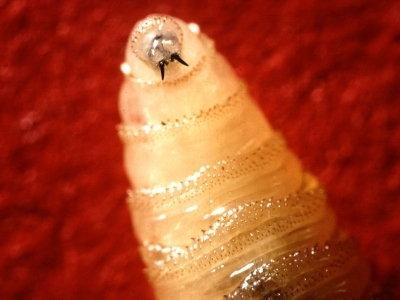
If you’ve seen the New World screwworm in headlines recently, you’ll know it’s difficult not to be alarmed by the shocking photos and news of its possible arrival. UGA extension specialists and veterinary experts came together last week to host a free Zoom webinar for agents and livestock professionals to combat potential panic with facts.…
Posted in: Pests -
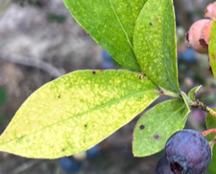
Jonathan E. Oliver, Fruit Pathologist, Department of Plant Pathology, UGA-Tifton Campus Introduction In the last few years, particularly wet weather across Georgia’s blueberry production belt led to several disease issues, including severe problems with Phytophthora root rot and multiple reports of algal stem blotch in both 2021 and 2023 (Oliver 2021, 2023).While algal stem blotch had been identified in Georgia blueberriesprior to…
-
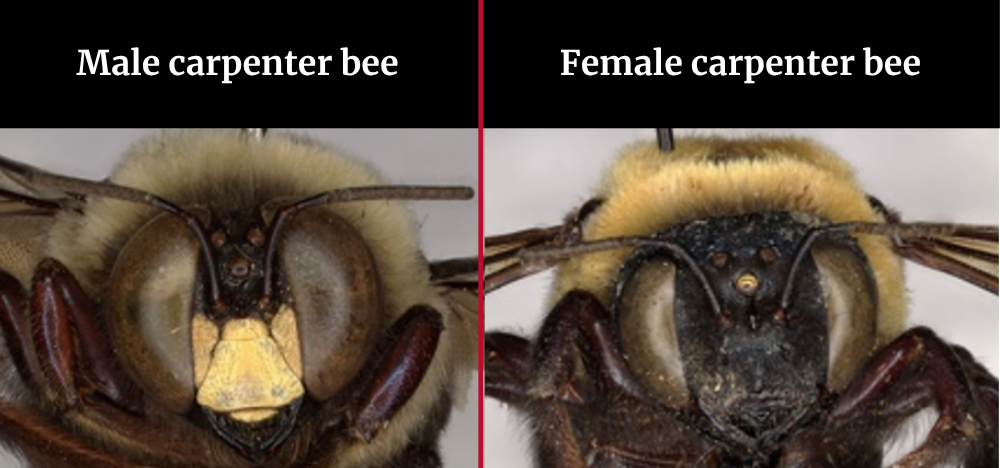
Xylocopa virginica [L.] Authors: A. J. Stevenson, D.R. Suiter, B.T. Forschler, University of Georgia Appearance A large bee (¾ -1 inch in length) similar in size to a bumble bee (Figure 1). They possess a yellow, fuzzed thorax and a metallic black abdomen that is smooth and lacks hair. Females possess an all-black head and…
-

Ashfaq A. Sial1, Zack Williams2, and Will Brown3 1Department of Entomology, University of Georgia, Athens, GA 306022University of Georgia Cooperative Extension, Bacon County, Alma, GA 315103University of Georgia Cooperative Extension, Appling County, Alma, GA 31510 Identification and Biology Flower thrips are chronic pests of both southern highbush and rabbiteye blueberries in the southeastern United States. Flower thrips are small insects, less than 1.5 mm…
-

Reticulitermes spp Authors: Dan Suiter & Brian Forschler, Entomologists, University of Georgia, 2021 Description Workers: Immature termites that are completely white and sightless.The caste responsible for foraging and building tunnels. Soldiers: Have enlarged, darker colored heads with large mandibles,responsible for defending the colony. Reproductives: Caste responsible for mating and laying eggs. Onlycaste that has pigmentation…