Rhyacionia frustrana
Authors: Elizabeth McCarty, Warnell School of Forestry and Natural Resources, University of Georgia, 2026
Description
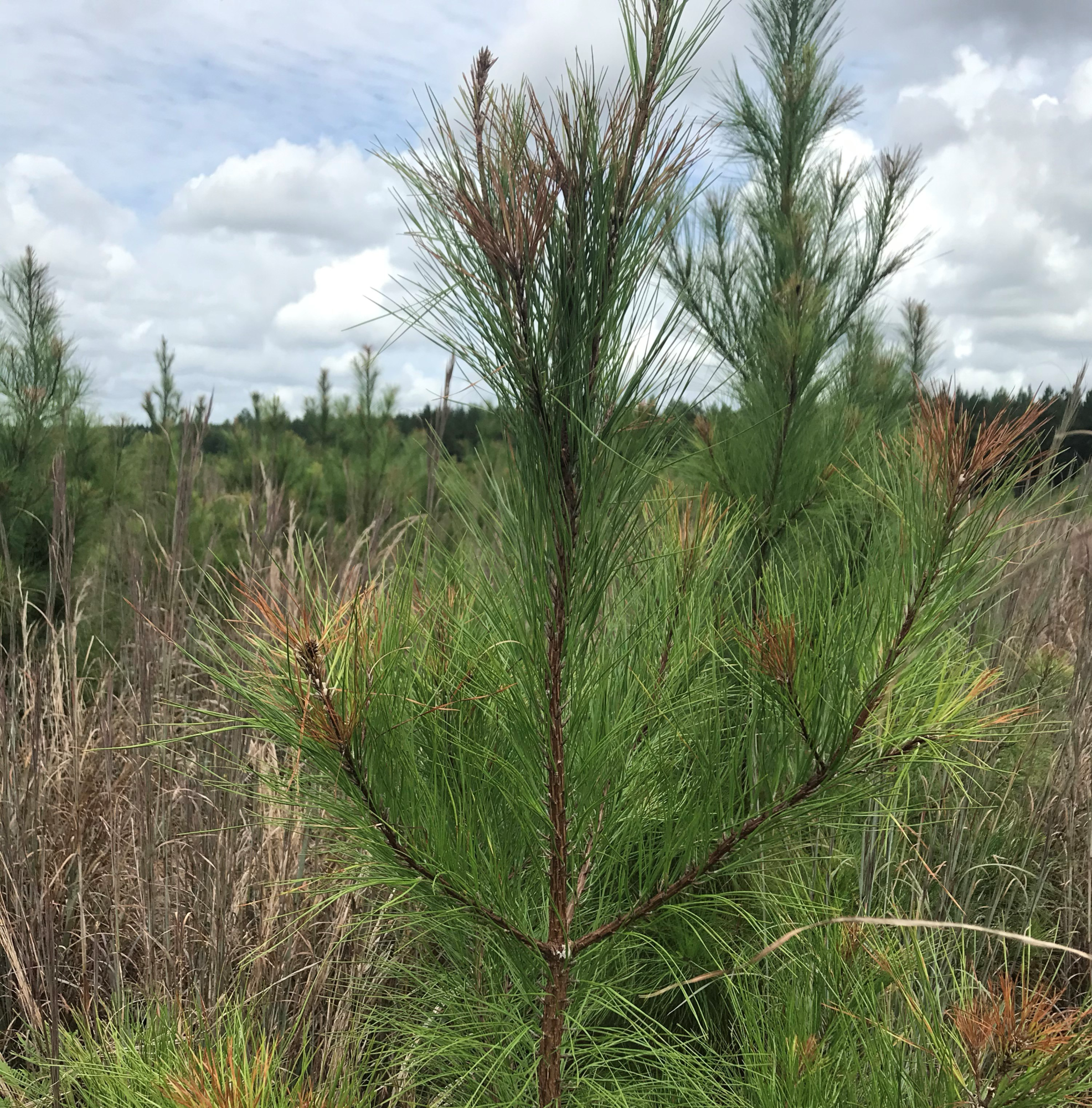
Nantucket pine tip moth (Rhyacionia frustrana) (NPTM)(Figure 1) is a pest of young pine stands in the southeastern US. NPTM has a native range in much of the eastern US and non-native introduced populations in the southwestern US. It feeds on the growing tips of young pine trees causing tip death and ultimately growth defects, making it problematic in forestry, Christmas tree farms, and some ornamental settings. NPTM primarily fees on loblolly, shortleaf, and Virginia pines, although loblolly is the most problematic for the forestry industry.

Biology
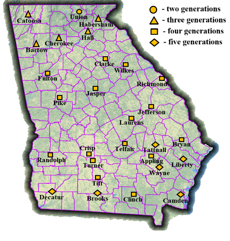
Life cycle: NPTM has egg, larval, pupal, and adult phases. They overwinter as pupae in pine shoots, and adults emerge in the early-spring. After mating, females lay eggs individually on pine needles. Larvae hatch and begin feeding on pine needles early in their development, causing little damage. Older larvae will bore into pine shoots to continue feeding in the stem, which damages the trees. Larvae pupate in the pine tip, and once adults emerge, the cycle starts all over again. NPTM has 2-5 generations a year. In Georgia, there are 2-3 generations in the northern part of the state, 4 generations in the Piedmont, and 4-5 generations in the coastal plain (Figure 2). Numerous generations in a year mean that pines can get damaged over and over again.
Damage
NPTM leaves a small hole when they bore into shoots, where resin then flows from the damaged tissue and hardens to a creamy whitish color (Figure 3A). The green pine tips turn brown and die once the older larvae bore into the stem (Figure 3B).NPTM damage reduces young pine height, but additionally, when the topmost growing tip is killed, lateral shoots will compete for dominance causing stem defects, like forking. Other NPTM impacts include decreased tree volume and poor wood quality. NPTM impacts on pine growth and form can reduce profits for growers and detract from tree appearance in ornamental settings.

In addition, with monocultures in general, there is a decreased diversity of natural enemies. Damage to seedlings and saplings occurs during the NPTM larval stages (instars). First instars mine the needles, causing little damage, and damage is then caused by older instars boring into the vascular tissue of the shoots. Obvious evidence of pine tip moth infestation typically includes resin flow on the bud or near the shoot terminal. However, with careful observation, NPTM tenting and resin droplets at the base of needles from 1st instars mining may be viewed earlier in the infestation. Tenting is a bit of webbing on the very tip of the pine shoot that is produced by second instar larvae. Resin can coat the webbing, giving the tent an iridescent appearance. Once the larva enters the bud or shoot it is protected within the tissue of the plant. NPTM damage will cause the fresh green pine tip to turn brown and die once the vascular tissue is damaged.
Management
NPTM management can be difficult for many reasons. It causes damage numerous times a year for multiple years to a tree crop that is harvested every 20-30+ years. The time factor makes understanding cost-benefit tradeoffs to management decisions challenging. Because older larvae bore into pine tips, they are protected from contact insecticide sprays. In the past, growers used contact insecticide sprays with spray timing models to try to target times when younger larvae were feeding on the outside of the trees. However, this method proved to be difficult, especially with overlapping NPTM generations later in the year. Growers do not often choose contact insecticides to manage NPTM.
In recent years, systemic insecticides have been the focus of NPTM management research, especially at the Forest Health Laboratory on the University of Georgia Tifton Campus. Systemic insecticides can be applied to trees in the nursery prior to planting or in the field shortly after planting, depending on the insecticide product and what the label allows.
Systemic insecticides can suppress NPTM infestations for 1-2 years, providing longer-term management than contact insecticides. Recently, Acelepryn (active ingredient: chlorantraniliprole) received a 2ee label for use in forestry nurseries for pine tip moth management. Ongoing UGA research on systemic insecticide dosing and application timing will refine management recommendations for NPTM. This research is funded by the UGA Southern Pine Health Research Cooperative.
Growers can reference the Forestry and Christmas Trees chapter of the Georgia Pest Management Handbook for the most updated NPTM insecticide recommendations.
References
Cassidy, V. C., E. McCarty, and C. Asaro. 2022. Management implications for Nantucket pinetip moth from temperature-induced shifts in phenology and voltinism attributed to climate change. Journal of Economic Entomology 115: 1331 – 1341.
McCarty, E., V. Cassidy, D. Clabo, D. Dickens, C. Asaro, and K.J.K. Gandhi. 2023. Efficacy offour insecticides for reducing Nantucket pine tip moth (Rhyaciona frustrana) (Lepidoptera: Tortricidae) infestation levels and improving growth metrics in loblolly pines. Journal of Economic Entomology 116: 835 – 847.
McCarty, E., V. Cassidy, K. Gandhi, and C. Villari. 2025. Pine tip moth: An insect pest of youngpine stands. Warnell Outreach Publication WSFNR-25-12C. 6 Pages.