Reticulitermes spp
Authors: Dan Suiter & Brian Forschler, Entomologists, University of Georgia, 2021
Description
Workers: Immature termites that are completely white and sightless.
The caste responsible for foraging and building tunnels.
Soldiers: Have enlarged, darker colored heads with large mandibles,
responsible for defending the colony.
Reproductives: Caste responsible for mating and laying eggs. Only
caste that has pigmentation and leaves colony to swarm. Winged
reproductive have four wings of equal length.


Biology
Subterranean termites live in social groups called colonies in the soil, with divisions of labor among different castes: workers, soldiers and winged reproductives. Workers eat wood as they consume it, sometimes leaving only a thin wooden exterior. Winged adults, called swarmers, are most often seen in Spring, but can be observed at any time of year. Outdoor swarms are signs of an active colony in the area or yard but not necessarily a sign of structural infestation.
Damage
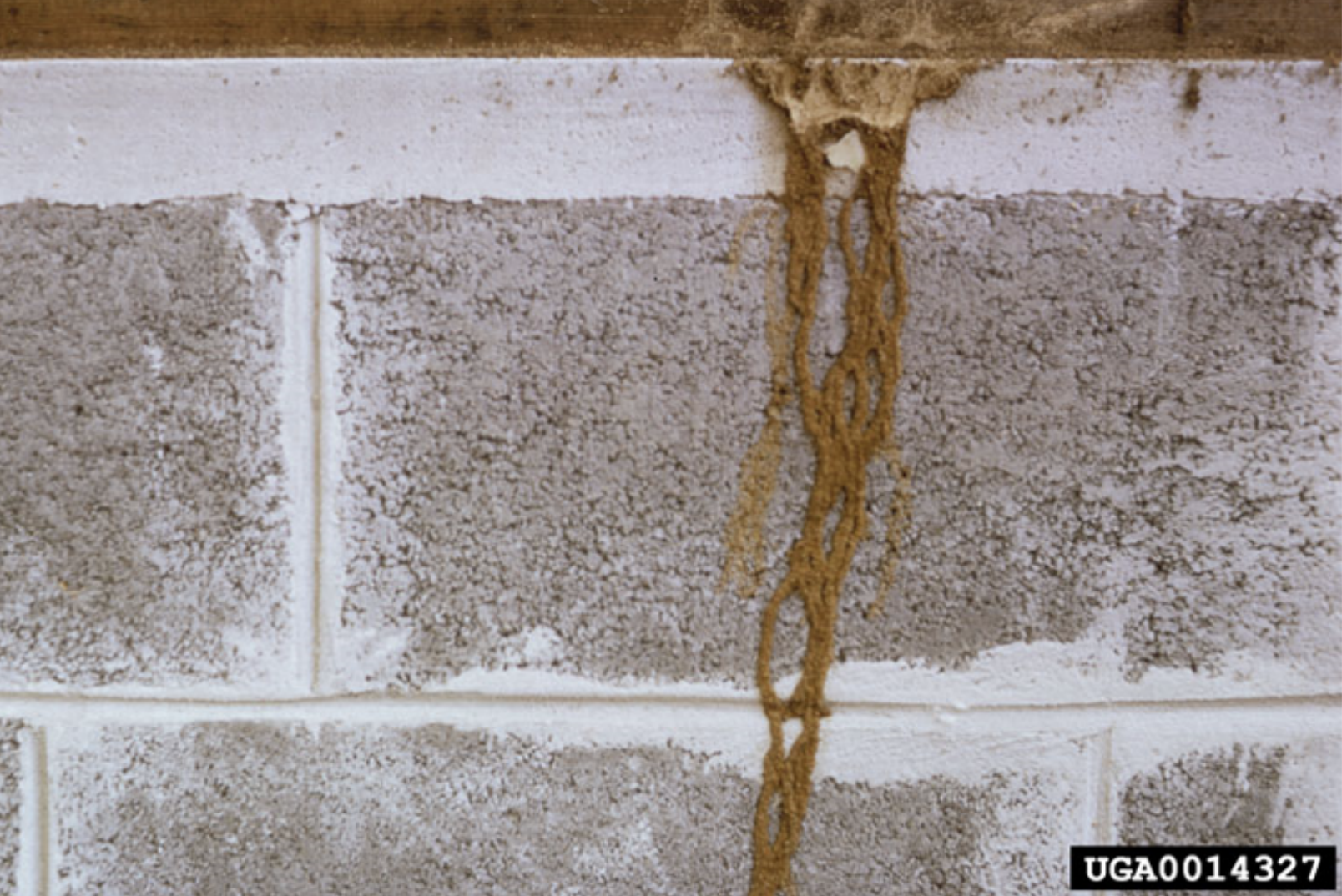
In natural ecosystems termites are considered beneficial because they help release nutrients from dead wood into the soil. In human environments, they are considered serious pests. Due to their widespread distribution, subterranean termites are responsible for most of the termite damage caused annually in the United States. The most common house-infesting termite in the U.S. is Reticulitermes flavipes, the eastern subterranean termite. Damage from subterranean termites can result in extensive damage and repair costs. Swarmers are the most common sign of termite infestation when they fly inside a structure or home. Other signs of infestation are shelter tubes used by termites to forage from the ground into a structure.
Management
A good preventative strategy is to have the home inspected annually for termites. If an infestation is present, seek help from a professional pest management company that offers termite control services using specialized equipment. Termite control is not a do-it-yourself project. Homeowners should not attempt to treat a structure for termites. The products and equipment used by professionals are not available to the novice.
Additional Resources
For more information call your local Extension Office and see University of Georgia Extension bulletins #1241, Termite Control Services: Information for the Georgia Property Owner, and #1209, Biology of Subterranean Termites in the Eastern United States, at caes.uga.edu/publications.