If you’ve seen the New World screwworm in headlines recently, you’ll know it’s difficult not to be alarmed by the shocking photos and news of its possible arrival. UGA extension specialists and veterinary experts came together last week to host a free Zoom webinar for agents and livestock professionals to combat potential panic with facts. Here’s what you should know.
What are New World screwworms?
Extension Veterinary Entomologist Dr. Nancy Hinkle takes the mic first to give viewers basic information on what the New World screwworm, or NWS, actually is.
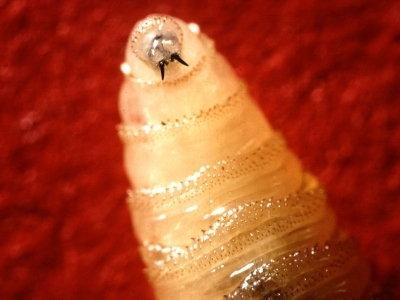
The NWS first arrived in Georgia in 1933 as a stowaway in a shipment of cattle. Unlike most fly pests of cattle, the adults are harmless; it’s the maggots we’re worried about.

Life cycle
Female adult screwworms are adept at finding any open wounds on livestock, and once they’ve located a cozy spot, they posit a batch of eggs into the lesion. These eggs hatch into larvae that begin to feed on the living tissue of the host. As they enjoy their meal, they secrete a fragrance to attract other female screwworms, which can worsen the problem.
Once they’ve eaten their fill, screwworms emerge from their hosts and drop to the ground, where they form pupal cases. Adults emerge from their cases as blue-green flies and set off in search of mates to begin the cycle again.
Effects on the host
Animals are unable to repel or expel screwworms without help from their caregivers, and infestations cause them pain. This can result in abnormal symptoms such as:
- Depressed or irritated behavior
- Loss of appetite
- Head shaking
- Smell of decaying flesh
Once an animal is infected, maggots must be physically extracted, which can be a cumbersome ordeal.
Sterile Insect Technique
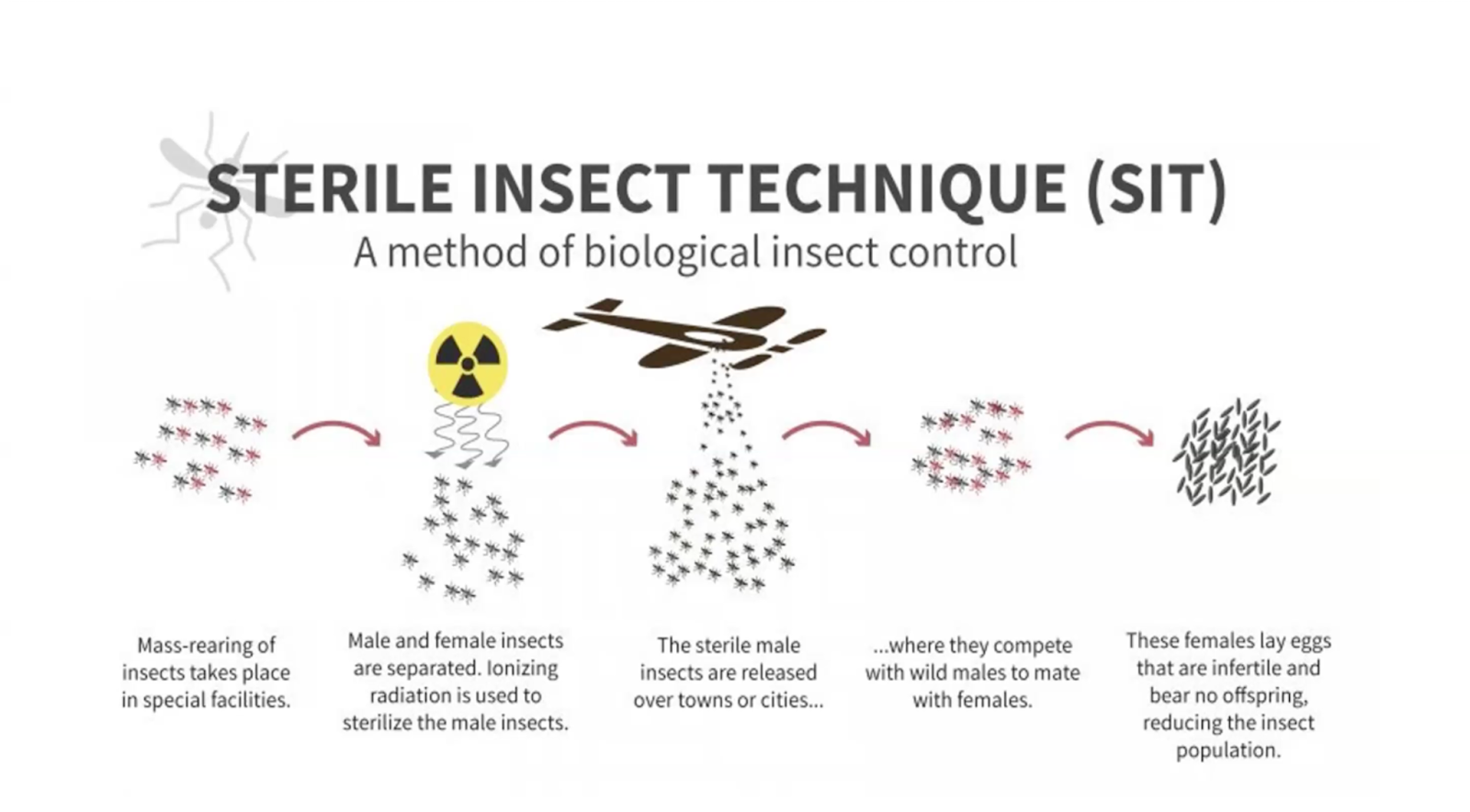
Extension Agent Dr. Raymond Fitzpatrick discusses a strategy that has successfully been utilized before: the sterile insect technique, or SIT. It’s a governmental collaboration in which large numbers of flies are reared in special facilities where male flies are separated from the group and treated with radiation that makes them sterile. These flies are then released into the environment, where they will mate without producing offspring. This method works well due to the fact that female screwworm flies mate only once in their lives.
What should YOU do?
Extension Agent Dr. Allison Johnson and Associate Professor Dr. Brad Heins have a couple of suggestions:
- Don’t use off-label pesticides
- Stick to trusted sources like screwworm.gov, the APHIS Status Website, the UGA Beef Team site and the Georgia Department of Agriculture’s State Vet Office.
- Avoid unnecessary travel with your livestock.
- Make sure you have a good relationship with your veterinarian.
If you suspect infection:
- Start by contacting your local Extension agent.
- Consult your vet.
- If prompted, clean wounds and submit larvae for confirmation.
- Follow all label directions on any treatments you’re directed to administer.
- Observe appropriate withdrawal times following treatment.
If an infection is confirmed:
- Limit movement of your animals
- Follow proper sanitation protocols.
- Monitor animal behavior and injuries.
Perhaps most importantly, Dr. Johnson says, “Don’t panic!” She cautions viewers against getting all of their information from social media, where fearmongering can be monetarily incentivized.
For more information, click here to watch the full seminar.