Sydney Weigand

-

(Orthoptera, Acrididae) (Schistocerca americana) – American Bird (Melanoplus, spp) – Melanoplinae (Orchelimum, spp) – Meadow Katydids Authors: Alton Sparks and David Riley, Entomologists, University of Georgia, 2021 Description Immature stages: – American bird grasshopper eggs are elongated (7.5 mm x 2 mm), light orange to tan, and are clustered together in a pod of 75-100…
-

Scirtothrips dorsalis Hood; Thysanoptera: Thripidae Author: Ashfaq Sial, Department of Entomology, University of Georgia, 2025 Chilli thrips (Scirtothrips dorsalis Hood; Thysanoptera: Thripidae) have emerged as a serious pest threat to blueberry production in the southeastern United States. Originally native to Asia, this invasive species has established populations in Florida, Louisiana, Texas, and most recently Georgia. The pest…
-
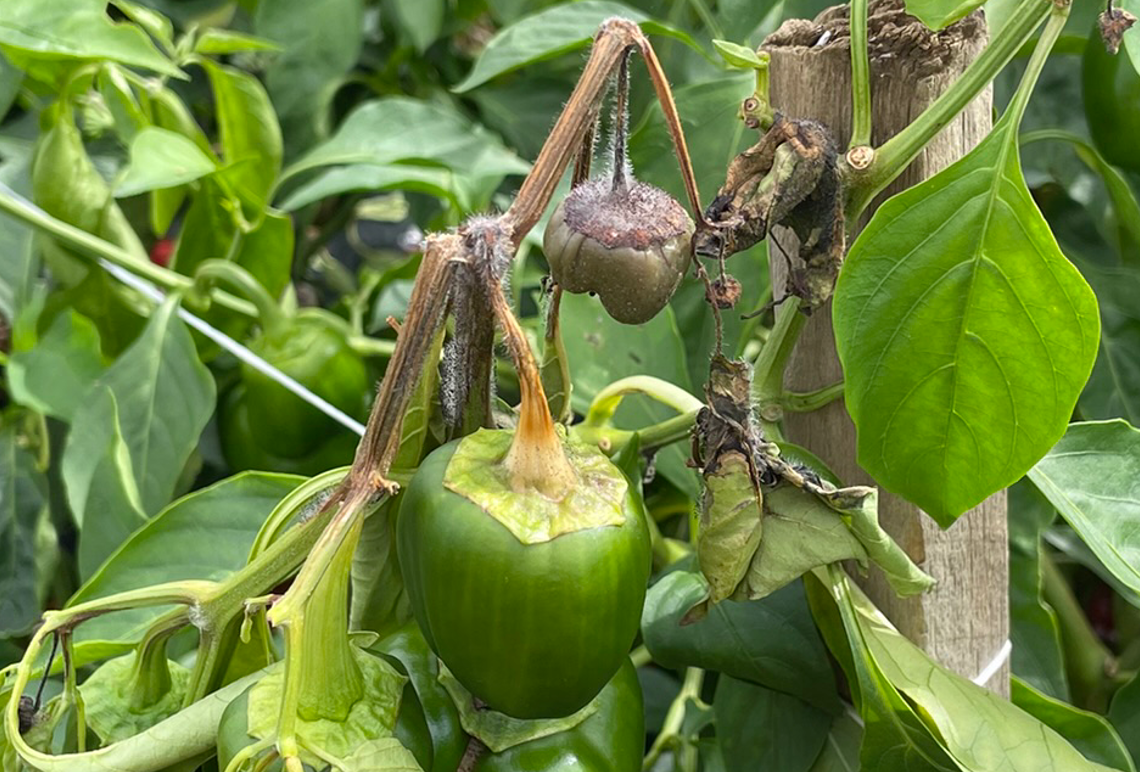
Pei-Ling Yu, Navjot Kaur, and Bhabesh Dutta, University of Georgia, 2025 Choanephora fruit rot has recently emerged as a significant disease in pepper production in Georgia, raising new concerns for Georgia growers. Outbreaks in bell pepper fields highlight the need for increased awareness, updated management strategies, and further research to address this rapidly developing threat.…
-

Anoop A. Malik and Bhabesh Dutta, and team, Department of Plant Pathology, University of Georgia Tifton Campus, 2025 SquashRX is a newly developed mobile application aimed at helping growers, county extension agents, and crop consultants make informed decisions to predict risk of whitefly-transmitted viruses (WTVs) in squash production in Georgia. These viruses, primarily, cucurbit leaf…
-

Meloidogyne spp. Author: Ganpati Jagdale, Extension Nematology & Pathology, University of Georgia, 2022 Description Females are pear-shaped and about 0.4-1.3 mm long and 0.27-0.75 mm wide. Whereas males are vermiform (worm-shaped) and about 1-1.5 mm long and 30-36 µm in diameter. Immature, second-stage juveniles (J2s) are thread-like and colorless roundworms (0.5 – 0.75 mm long),…
-

(Coleoptera, Chrysomelidae) Author: David Riley, Entomologist, University of Georgia, 2018 Description Immature stages: The eggs are orange, elongated, and occur in clusters of 20-60 eggs. The larvae are reddish and black and very plump. Two rows of black spots occur on each side of the abdomen. Both stages occur on the leaves of tomato or…
-

Trichoplusia ni (Hübner) Authors: Alton “Stormy” Sparks, David Riley, University of Georgia, 2021 Description Immature stages: Eggs are round and flat (0.6 mm wide by 0.4 mm high) with fine ridges from top to bottom. Larvae are light to dark green with a light longitudinal stripe on either side of the body and two pair…
-
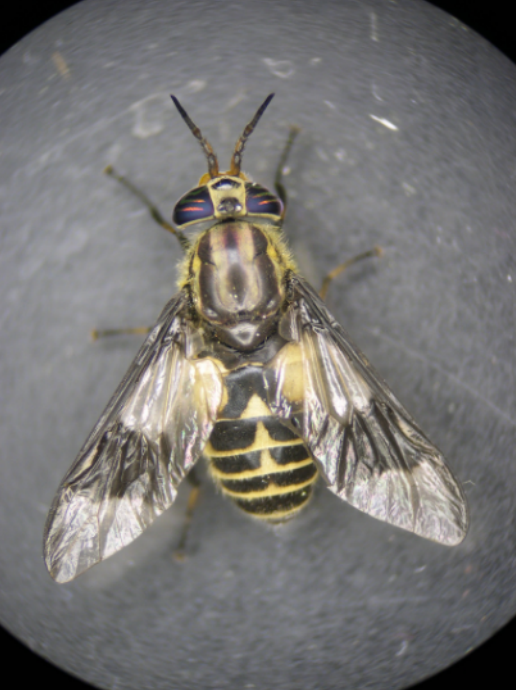
Chrysops, Diachlorus, Tabanus spp. (Insecta: Diptera: Tabanidae) Author: Dr. Nancy Hinkle, Entomologist, University of Georgia, 2022 Description Immature stages: Eggs are cylindrical in shape, 1 to 2.5 mm in length and are initially creamy white but darken within hours. Larvae taper at each end and are whitish, brown or green depending on the species. Black…
-
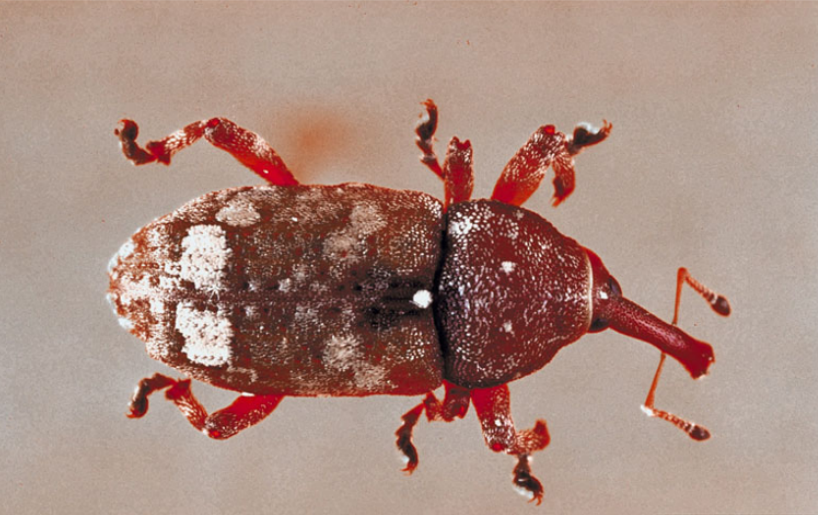
Pissodes nemorensis Authors: Integrated Pest Management Program, University of Georgia, 2020 Description Immature stages: The legless larvae are white with a light amber to dark orange head. They can be 6-12 mm long when mature. The pupae are similar in size to adults, but are creamy white, darkening as they complete the developmental stage. Adult…